
What is a stopwatch?
Watches, timepieces, chronometers, chronographs. Words that seem very similar to us but actually encompass very different technical characteristics. For everyone, the watch is an accessory, worn on the wrist, on the wall, on furniture, in the pocket, useful because it always allows you to know the time. But it can also be much, much more. Today we discover together what a chronograph is, in a simple and accessible way for all.
Watch or much more?
The first thing to say is that a chronograph is not exactly a watch, but an additional feature of it, defined in jargon as a 'complication.' It is a special technical addition that allows measuring and indicating the elapsed time within a limited period. For laypeople, a kind of stopwatch.
So, what exactly is a chronograph? It serves not only to measure time but also (and above all) speed.
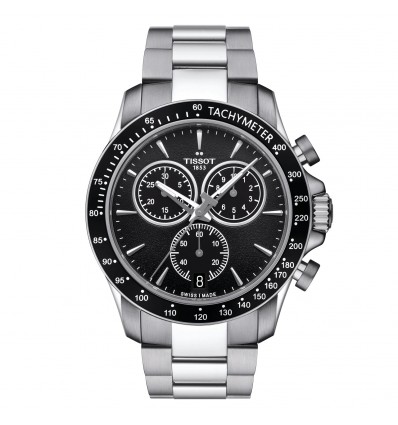
Chronograph or chronometer?
Chronograph and chronometer are two words derived from ancient Greek. The first indicates the graphical tracking of time, that is, the measurement of short intervals, not necessarily associated with a timepiece. The chronometer, on the other hand, is nothing more than a time measurer.
Therefore, a chronograph is by nature also a chronometer.
In chronographs, in fact, it is possible to start, reset, and stop a hand as desired, to measure time within a precise interval. Usually, it is used to measure times with great precision. In the most advanced models, it is even possible to measure hundredths of a second.
In detail
The dials
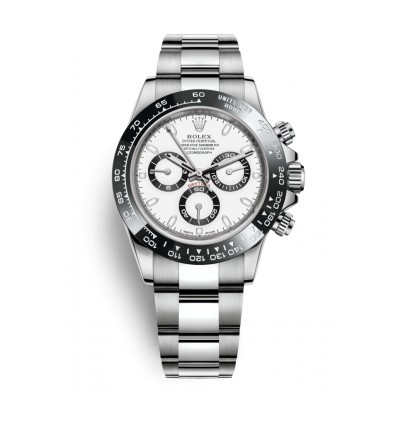
You may have noticed that chronographs have two or three additional counters on the dial. They serve precisely to measure hours, minutes, and seconds with extreme precision.
The time is indicated by special hands.
How is it used?
Despite its complex mechanism, modern chronographs are very simple to use. By convention, they have two buttons. One at the top, at 2 o'clock, the central hand starts measuring the event, as do the various counters present. To stop the measurement, simply press the button again.
The second button, lower down, at 4 o'clock, resets all counters.
Simple, but effective.
The additions
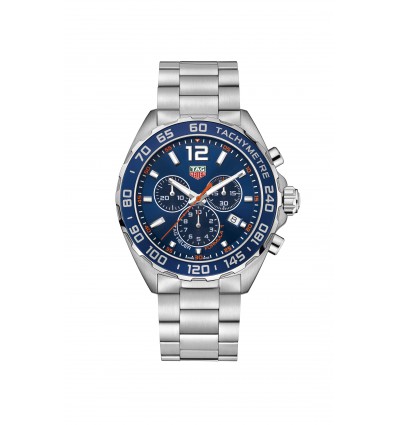
In some chronographs, decidedly particular and unique in their kind, there is also the tachymetric frequency, that is, the meters traveled every second. In the 1920s, the heart rate or pulse frequency was often included as well, much appreciated by the nurses of the time.
A dive into the past
It is curious to know that the first chronograph was invented in 1816 by watchmaker Luis Moinet, for astronomical purposes. Its innovative mechanism rested on rubies and was completely immersed in oil. The first modern chronograph, used similarly to the current one, dates back to about 60 years later.
I hope this very brief guide has helped to make a little clearer the extraordinary difference between a "simple" timepiece and the technological and cutting-edge world of chronographs. Who knows what technology will bring us in the future in the field of watchmaking. Certainly, we can say we always have time at our fingertips.

