Differences between sapphire glass, plastic, esalite, mineral glass
When it comes to watches, we often focus on the design, mechanics, and style features. But there is a fundamental aspect that often goes unnoticed: the glass that protects the dial. In this article, we will explore the differences between the various types of glass used in watches, from traditional mineral glass to the sophisticated sapphire glass, and even the lesser-known esalite or plastic glass.
Plexiglass or Acrylic
Plexiglass is a type of transparent plastic material also known as PMMA (polymethyl methacrylate). It is light, impact-resistant, and offers optical clarity similar to glass. Thanks to its flexibility and low cost, plexiglass is often used for sports watches and vintage models. However, it is prone to scratches and may require special care to keep it in good condition over time.
Esalite or Plastic Glass
Esalite or plastic glass is a less common choice compared to mineral and sapphire glass, but it has some unique features. Made from polycarbonate or other thermoplastic materials, esalite glass is extremely light and flexible, making watches equipped with this type of glass ideal for sports and adventurous activities. However, esalite glass is more susceptible to scratches than mineral and sapphire glass and may require more frequent replacement.
Mineral Glass
Mineral glass is the most common type of glass used in watches. It is made from a mixture of sodium and calcium silicate and is heat-treated to increase its resistance to impacts and abrasions. Its main feature is scratch resistance, making it a popular choice for many watches. However, it is less impact-resistant than other types of glass.
Sapphire Crystal Glass
Sapphire glass represents the pinnacle of material engineering in the watch sector. Made from synthetic sapphire, this material offers extreme hardness, ranking second only to diamond on the Mohs hardness scale. Its scratch resistance makes it the preferred choice for high-end watches, providing reliable protection for the dial.
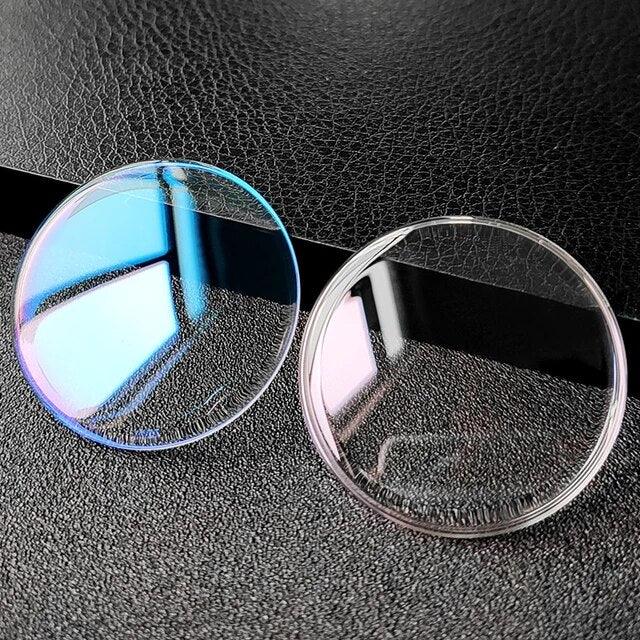
Moreover, sapphire glass boasts exceptional transparency and superior optical clarity compared to mineral glass. This feature minimizes visual distortion and ensures a sharp view of the dial in any lighting condition. Additionally, the surface of sapphire glass is designed to reduce reflections, allowing optimal readability of the watch even under direct sunlight.
Despite its superior performance, it is important to note that sapphire glass tends to have a higher cost compared to mineral glass or other materials. However, for watch enthusiasts seeking the highest quality and performance, investing in sapphire glass can be considered a long-term added value for the durability and appearance of their watch.
Scratch-Resistant and Anti-Reflective Treatments
Many high-end watches equipped with sapphire glass are also treated to further improve their performance. The scratch-resistant treatment applied to sapphire glass ensures greater resistance to scratches, protecting the dial from inevitable signs of wear. This is especially important for those who use their watches in situations where they are exposed to frequent contact or abrasion.
Furthermore, many high-end watches also feature anti-reflective treatments, which reduce unwanted reflections on the glass surface. This not only improves the visibility and clarity of the dial but also reduces eye strain caused by reflections, especially in bright light or under artificial lighting.
Conclusions: In conclusion, the choice of glass type for your watch depends on your personal preferences, budget, and intended use of the watch. Mineral glass is a cost-effective and durable choice, while sapphire glass offers the highest hardness and clarity, albeit at a higher price. Sapphire crystal glass represents a middle ground for those seeking a compromise between performance and cost. We hope this guide helps you make an informed decision when purchasing your next watch.