Mechanical watch: how does it work?
The mechanical watch is a work of engineering art, the triumph of kinetic energy. Designed to keep track of time with incredible accuracy, it has remained over the centuries one of the most used and appreciated timepieces. What sets a mechanical watch apart from a quartz watch? What mechanism keeps the perpetual motion alive? We will answer this and other questions in the article Mechanical watch: how does it work? Keep reading!
How the mechanical watch works
The mechanical watch consists of a series of elements that work together, in a single goal: measuring time.
The mechanism of automatic watches is characterized by a delicate yet sturdy balance, and its appearance is an icon of complexity and charm.
In this article, we will go into more detail and explore the topic by trying to explain, in an intuitive and simple way, some of the technical specifications that define it.
The heart of the mechanical watch
The heart of the watch is pure movement and consists of a series of gears, springs, and other components, all working simultaneously.
As almost everyone knows, the mechanical watch needs winding. This is to ensure its operation. The operation depends on a spring, the so-called perpetual motion, which must be wound manually or automatically.
When the winding is complete, the watch is ready to measure your time.
Manual movement vs automatic movement: the differences
The main difference between manual and automatic movement in a mechanical watch concerns the source that powers the mechanism.
The manual movement requires the owner’s intervention who, by winding the main spring via the crown, ensures its operation until the next winding.
Typically, for a mechanical watch, the average time between windings can range from 12/24 hours to 2/5 days. It all depends on the power reserve available.
The automatic movement, unlike the manual one, uses an oscillating rotor to wind the spring entirely on its own.
The rotor is in turn connected to a movement axle that moves back and forth every time the watch is worn. This motion turns the rotor, which in turn winds the spring.
Too complex?
Simply put, it is the energy of your movement that makes the motion of your automatic watch eternal!
Mechanical watch vs quartz watch: what changes
Unlike the mechanical watch, the quartz watch measures time through an electronic movement. Powered by a special battery, the kinetic flow vibrates at precise intervals. The vibration is then converted into an impulse, capable of driving the motor that brings the watch to life.
Known for its accuracy, the quartz watch requires a battery replacement roughly every 1-2 years. However, it generally demands less care and simpler maintenance routines.
A quartz watch struggles to compete with the primal beauty of the mechanical watch, but the choice of the perfect timepiece is subjective and depends on needs and the desired level of practicality!
Mechanical watch operation: the components
As mentioned earlier, the mechanical watch consists of several parts that cooperate to keep time. But what are its main components?
- Movement, or perpetual motion, is the "soul of the watch"
- Dial, that is its "face"
- Hands: connected to the transmission shaft, they measure time thanks to their link with the gears
- Balance wheel: oscillates at a steady pace and regulates the watch’s rhythm
- Hairspring: a steel spring that expands and contracts controlling the balance wheel
- Rubies: tiny ruby bearings that serve to reduce friction (and wear) between moving parts
- Crown: the small button that allows setting the date/time and manually winding the watch
- Case: the element that protects the precious mechanism from the outside
Mechanical watch: some examples
There are many types of mechanical watches, more than you might imagine! Have you ever heard of the pendulum clock or its "relative," the cuckoo clock?
Here are some examples of mechanical watches!
- Pendulum clock: this is a type of mechanical clock that uses the pendulum as a regulator. With its oscillation, the pendulum drives the clock mechanism, making it advance and keeping time. A charming variant is the cuckoo clock!
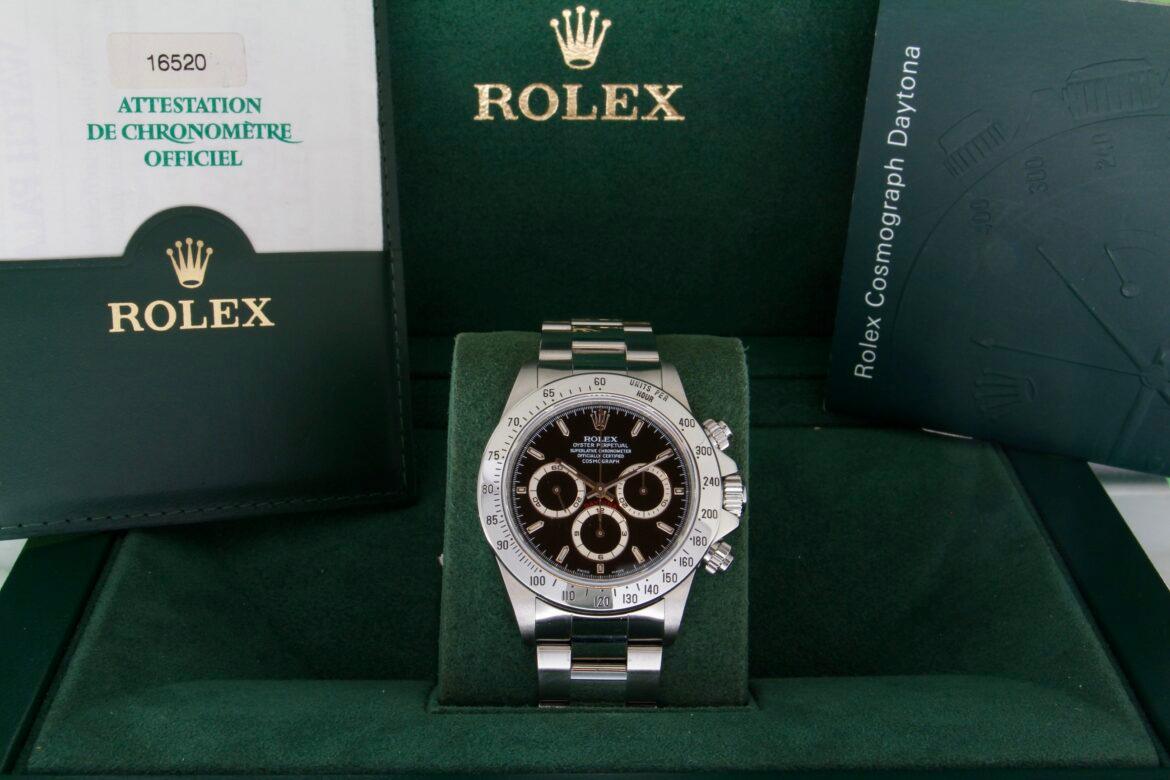
- Wristwatch: mechanical wristwatches are powered by a manual or automatic mechanical movement and have been popular since the late 19th century. They are a true piece of history!
- Pocket watch: working similarly to the wristwatch, the mechanical pocket watch is powered by either an automatic or manual movement. The difference? It is worn... in the pocket!
These are just some of the best-known types of mechanical watches ever. All models share one thing in common: the ability to transcend the concept of object and transform it into a unique and evocative measuring experience.
The importance of maintenance in the mechanical watch: the watchmaker’s role
To ensure correct and lasting operation, the mechanical watch requires timely maintenance.
It is recommended to clean the mechanical watch regularly using a strictly dry microfiber cloth. If not worn, it is suggested to keep the timepiece stored away from sources of light and heat.
It is good practice to take the mechanical watch to a professional watchmaker for a full overhaul every 4-5 years. During this check, the expert will disassemble the watch, inspect all its parts, and lubricate it to ensure smooth operation and limit friction that could damage the mechanics over time. If necessary, the balance wheel can be adjusted to guarantee the timepiece greater accuracy.
Mechanical watch: its operation revealed
In conclusion, the mechanical watch represents a winning choice for all those who appreciate the fusion of refined elegance and tradition. Thanks to its human technology, this little gem of watchmaking is a work of art that can be passed down from generation to generation.
In the article mechanical watch how it works we revealed some useful information to understand its operation. If you want to discover more about the incredible world of watches, you can read all the dedicated articles.
Are you passionate about wearing Rolex second hand? Discover the new models available, get advice and information, and share your passion with a community of luxury watch lovers! Join now our Facebook group ROLEX BUY ITALIA. It’s free!